Off-Market Deals San Diego: Owner Data + Outreach Playbook
San Diego off-market playbook: filters, verified owner data, scripts, cadences, objections, and KPIs to turn micro-lists into booked meetings.
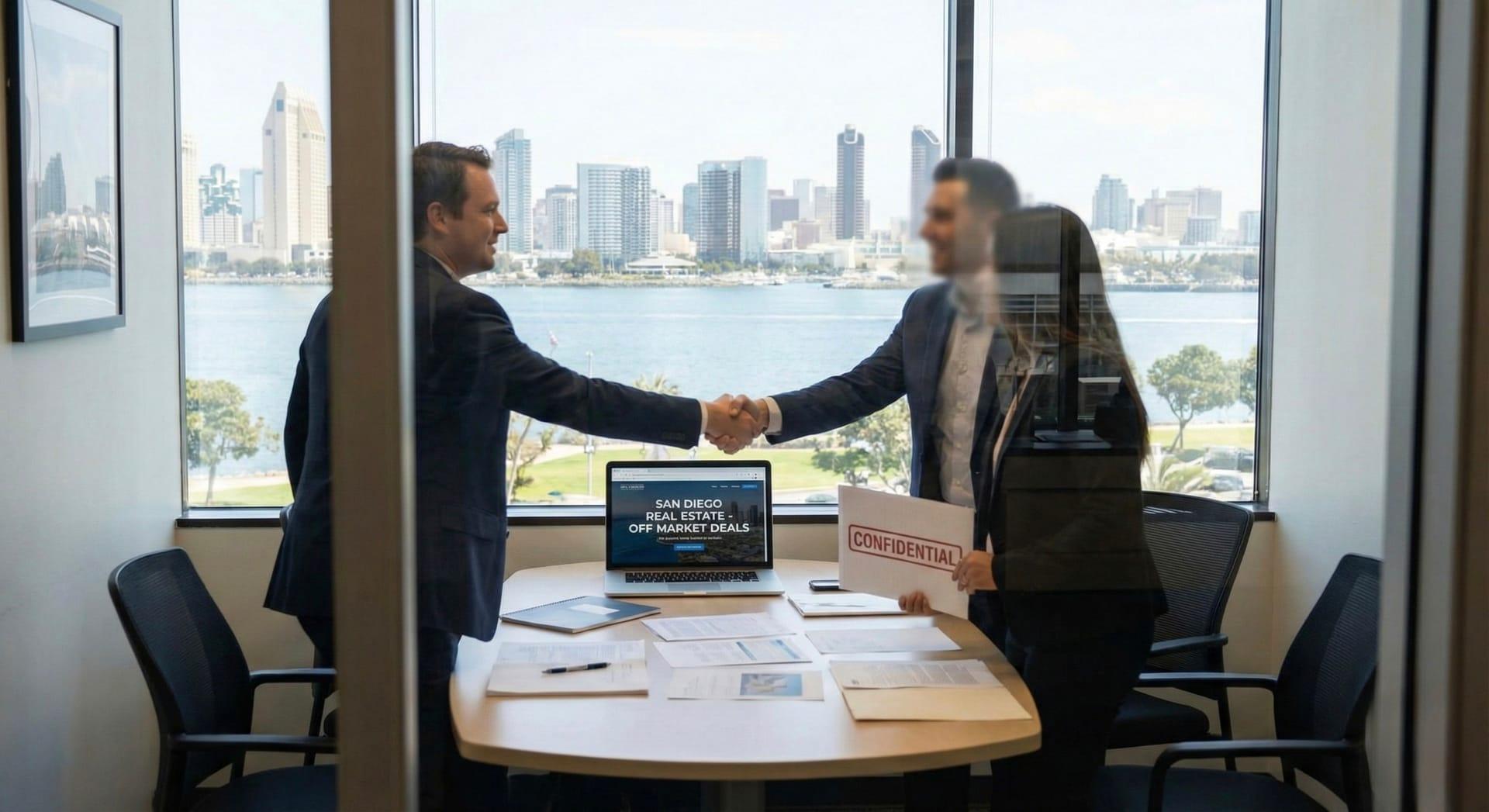
San Diego’s market is active and highly local. The gap between watching activity and booking meetings is how quickly you combine the right filters, verified owner contacts, and a consistent cadence. Use this SD-specific workflow to move from micro-list to meetings this week.
Where to Start (Submarkets That Respond)
Your exact targets depend on asset type, but these pockets consistently respond when your opener is specific and local:
-
North Park & Normal Heights (Multifamily 5–20u): mid-vintage stock, light churn, value-add potential.
-
Chula Vista & National City (Corner Retail/Strip): stable density, commuter corridors, repositioning routes.
-
Point Loma & Sports Arena Area (Small Industrial/Flex): ops-oriented owners, recent improvements, NOI focus.
-
Oceanside & Vista (SFR → ADU/Small Multi): growth signals, rent pressure, conversion opportunities.
Principle: Work in micro-lists of 300–1,000 properties per batch so you can personalize and keep reply rates healthy.
Filters That Work (Launch 3 Micro-Lists)
- North Park / Normal Heights · Multifamily 5–20u · 1950–1985
Outcome: inventory with stabilization and NOI-improvement options.
- Chula Vista / National City · Corner Retail · Arterial Streets
Outcome: visibility, traffic, clear repositioning plays.
- Point Loma / Sports Arena · Small Industrial · Recent Improvements
Outcome: owners open to conversations around NOI and tenant mix.
Complementary signals: lot size, year built, recent ownership change, visible vacancy, recent permits.
From Filters → Verified Owners → First Contact
-
Export the micro-list.
-
Verify email (reduce bounces) and validate phone (test 1–2 numbers before scale).
-
Classify role for each record: Owner / PM / Rep (each uses a different opener).
-
In UnrealCRM, tag the list Ready to Contact and load the cadence.
Cadence for San Diego (10–12 Days, 6–7 Touches)
Day 1
-
Email #1: local opener (2–3 comps) + direct question.
-
Call #1: if no answer, leave a short voicemail referencing “two possible routes.”
Day 3
-
SMS #1: brief and compliant with opt-out.
-
Email #2: micro-case nearby (“intro → meeting in 72 hours”).
Day 6
-
Call #2: ask for 10 minutes to review options.
-
Email #3: FAQs + two time options.
Day 10–12
- Email #4: hand-raiser / last nudge (“Should I keep the door open?”).
Keep it simple and consistent; local relevance beats long copy.
Copy-and-Paste Scripts
Email #1 — Local Opener (San Diego)
Subject: 2–3 off-market options near {neighborhood/ZIP}
Body:
Hi {FirstName},
We’re working {asset type} in {SD area}. Based on {A/B/C comps}, there are two viable routes worth a quick look.
Open to a 10-minute screen-share this week?
— {YourName}, UnrealCRM
Email #2 — Micro-Case (72h to Meeting)
Subject: {SD area}: intro → meeting in 72 hours
Body:
Last week in {area}, we booked {X} meetings on {asset type} after sharing 2–3 local comps.
Would Wed 10:00 or Thu 16:30 work to walk through your options?
SMS #1 — Short + Opt-Out
Hi {FirstName}, it’s {YourName}. I have 2–3 workable options near {street/ZIP}. 10-min this week? Reply STOP to opt out.
Calls — Openers (by Role)
-
Owner: “In {area}, {asset} are trading around {insight}. I can show two quick routes (stabilize vs. engage buyers). 10 minutes to review?”
-
Property Manager (PM): “We’re mapping {asset} in {area} with buyer interest relevant to {property/address}. Who is the best owner/decision-maker for a quick 10-min review?”
-
Representative/Broker: “Working {asset} in {area} with buyers active around {A/B/C comps}. Open to a 10-minsync to see if any route fits your client?”
Objections (Clean Responses)
-
“I already have an agent.” Great—this is complementary: two hard datapoints (cap rate + active comps) so you can decide if engaging buyers makes sense.
-
“No time.” Understood. 10 minutes, two routes, you decide if it’s a fit.
-
“Send info.” I’ll send a one-pager and propose two time slots to answer live.
What to Send When They Ask for “More Info” (One-Pager)
-
Property snapshot (address, asset, key facts)
-
2–3 tight-radius comps
-
Buyer activity (profiles, not names)
-
Two routes (stabilize vs. sell/1031)
-
Next steps: 10-minute review with two proposed times
UnrealCRM stores these templates, merges fields, and logs opens/replies.
KPIs That Predict Pipeline in SD
-
Contact rate (answers + replies): a typical range is 20–35% when lists are verified and openers reference local comps. Results vary by micro-market and asset. We’ll publish actuals from the San Diego campaign in the next update.
-
Meetings per 100 valid contacts: 6–12 (improves when you reference blocks/landmarks).
-
Time to first meeting: < 7–10 days.
-
Wins: track by micro-list (area + asset + signal) to find 2–3× pockets.
Compliance (Plain-English Reminder)
This article is informational and not legal advice. Follow these basics in California:
-
Obtain consent where applicable; use clear opt-out language (e.g., “Reply STOP”).
-
Maintain suppression lists and honor Do-Not-Call / Do-Not-Sell/Share signals.
-
Document processes across channels (email/SMS/calls).
Definitions:
-
TCPA = Telephone Consumer Protection Act (U.S.)
-
CCPA = California Consumer Privacy Act
-
CPRA = California Privacy Rights Act (amends/expands CCPA)
Why Start With San Diego (TAM Methodology)
San Diego is our beachhead: concentrated submarkets with active inventory (North Park/Normal Heights, Chula Vista/National City, Point Loma/Sports Arena, Oceanside/Vista), partner access, and strong off-market relevance—ideal for fast validation and case studies.
TAM approach we’ll publish:
-
Property TAM: count target assets in SD County (assessor data) → apply an addressable % by asset/year-built band.
-
Buyer/Service TAM: brokers/investors + home-services prospecting owners in SD.
-
Reachable TAM: contactable + compliant records after verification/suppression.
We’ll add concrete figures once the county/industry roll-up is finished and link to a methods page.
See Owners in San Diego — in Minutes
Filter by submarket/asset, reach verified owners, and run multi-channel cadences inside one pipeline.
Book a live demo — we’ll preview two real routes for your area.